As the district became more settled, Kolomaya School became the centre of Ukrainian cultural life. This was the place where young people gathered - to sing, dance, perform plays and concerts and discuss their future plans.
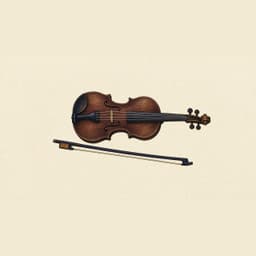
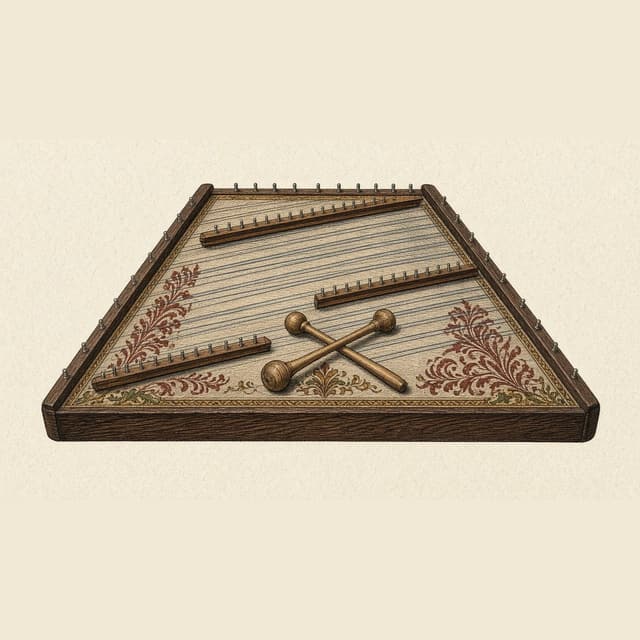
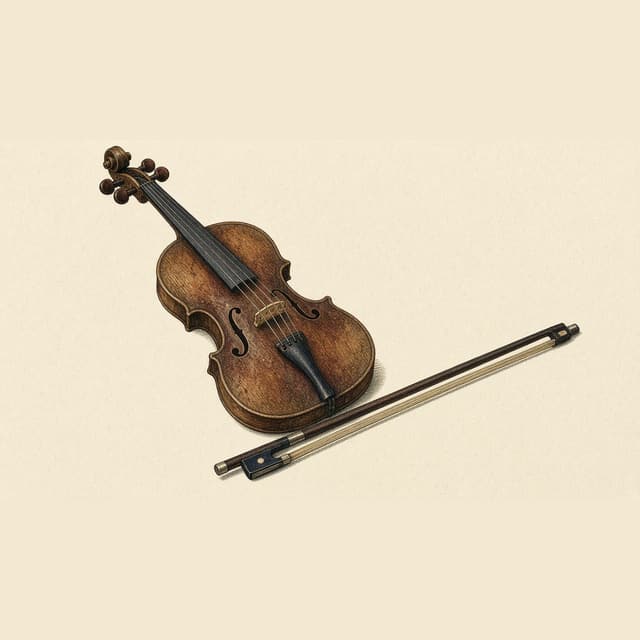
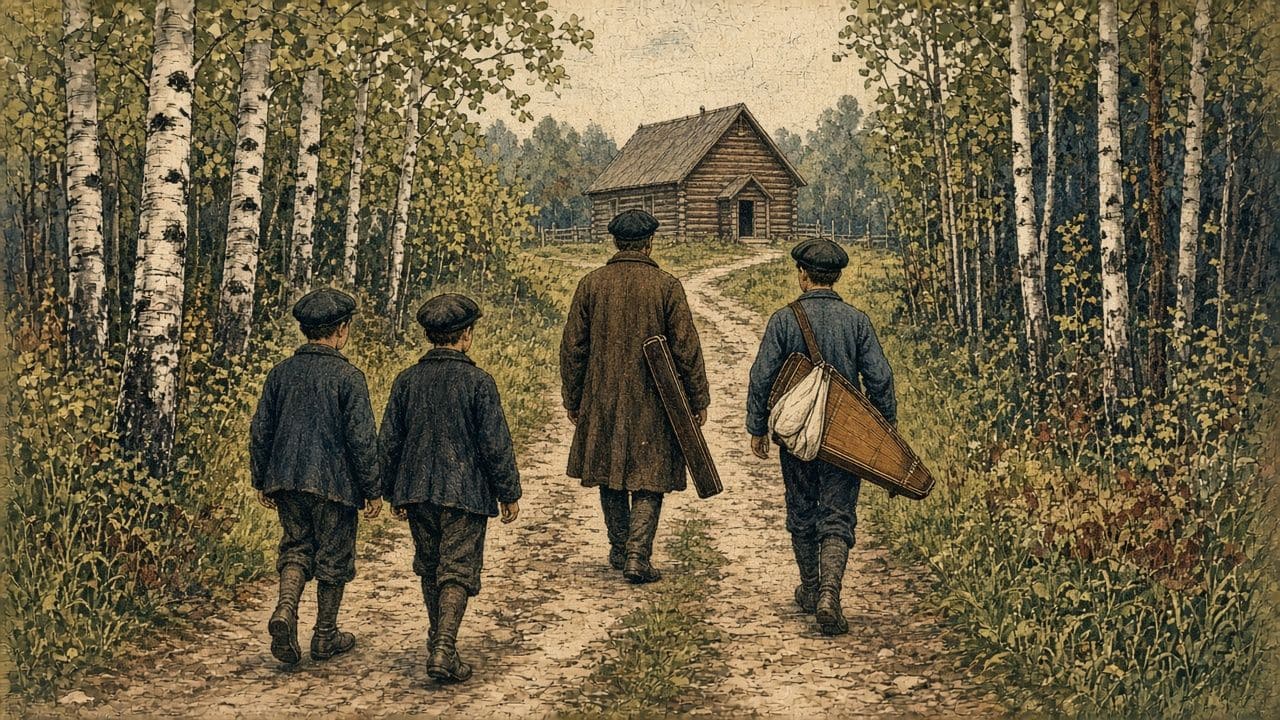
Illustration: the dulcimer played by the son at the school dance.Illustration: the violin played at the school dance.
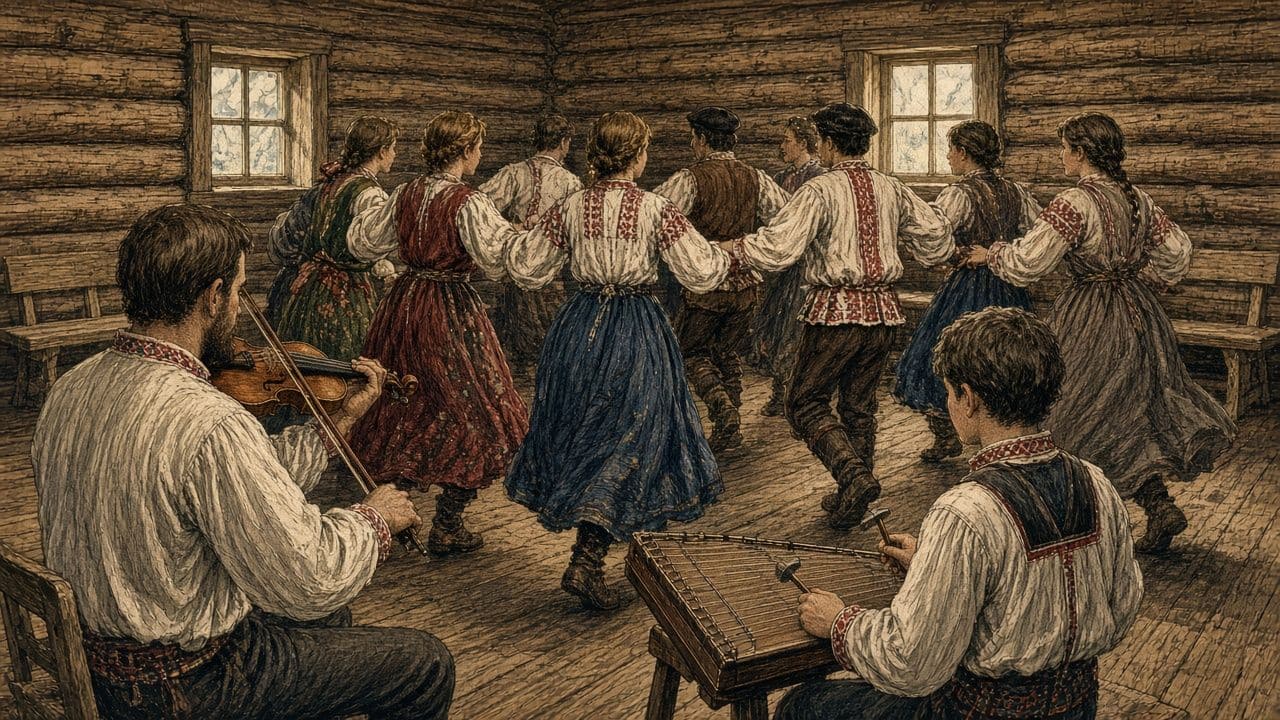
One day it was decided to hold a dance in which case we had to have an orchestra. Another chap and I were chosen to make the necessary arrangements. We had to walk two and a half miles to ask Mr. Ternawsky and his son to provide the music for us. The father played the violin and his son, the dulcimer. They walked back with us and provided the music. We engaged them for the grand sum of thirty cents, being all the money we had for this purpose. They played for us all afternoon and their pay of thirty cents was clear profit since it did not cost them anything for transportation or income tax.
Illustration: the thirty-cent orchestra, violin and dulcimer, at Kolomaya School.Illustration: the walk to fetch the violin and dulcimer players. Not likenesses.
Illustrated online edition. The memoir text follows the 2011 copy compiled by Rene Nicholas Bilodeau.