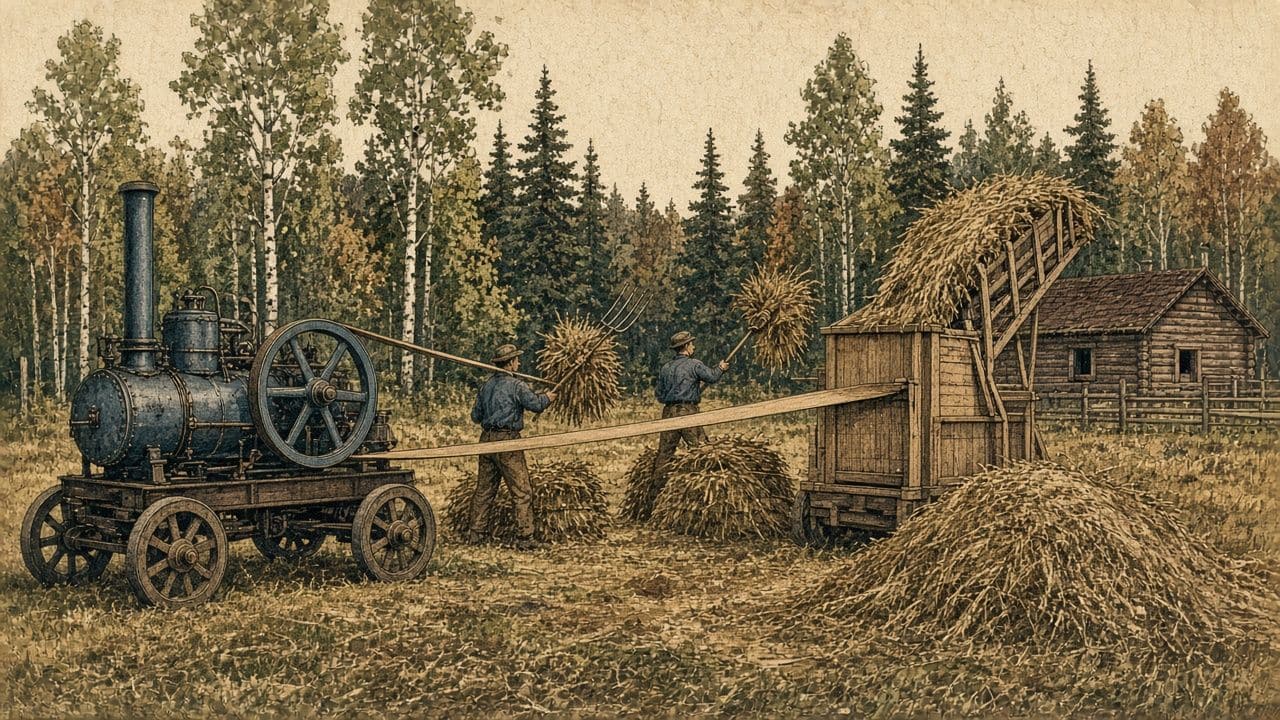
In 1908 my father gave me eighty acres of his homestead. Six of us farmers jointly bought a threshing machine which contained a portable steamer, wooden 22 inch separator with hand feed, straw carrier and low bagger. Although I did not know much about threshing machines, apparently I knew more that the other five as I was chosen to be the operator. I think we broke all records as to the number of farmers we serviced and the length of the threshing season which did not end until March. There were new settlers west of Venlaw right up to the Duck Mountains. The farms were scattered since the C.P.R. and school lands were vacant.
Illustration: A steam engine and a threshing machine.Archival image
“Threshing by steam in a prairie wheat-field,” an engraving published in 1891. The memoir’s outfit was a later one: a portable steamer, a wooden 22-inch separator, and oxen on bush trails. This is not that machine.
Source
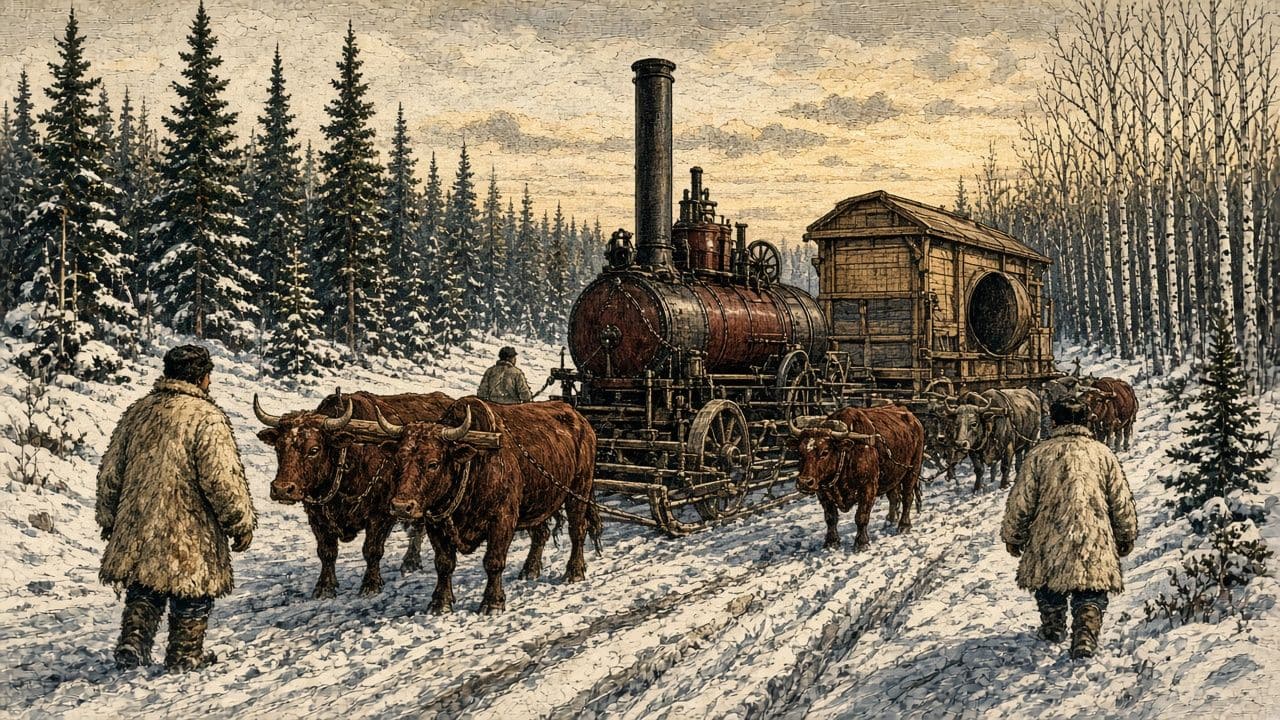
In those days the farmers had only two or three small stacks of thresh. First, we threshed our own crops and those of near neighbours. By that time it would begin to freeze. Then we would move west to the other settlers. The thresher and steamer were moved from farm to farm by oxen. The best road at that time was a bush trail. During a heavy winter snowfall, it took three or four teams of oxen to move the equipment. I was the only paid man on the job. The others, pitchers, ban cutters, feeders, straw pitchers, grain carriers and the water man, who supplied water for the steamer, were neighbours helping one another. With good cooperation and luck we managed to do one job and move to another place in one day. During the heavy frost, especially in the mornings, the grinding of the wheels through the snow could be heard for two or three miles.
Illustration: Oxen hauling a threshing outfit through snow.
The woman of the home where we were to thresh would make preparations a week in advance in order to feed some seventeen men and, if necessary, provide lodging for the night in a one-room house. The men slept on the earth floor on straw bedding. There was plenty to eat, especially meat from moose, elk and rabbits. In those days there was an abundance of wild game. The law was not strict and farmers were allowed to procure the odd wild animal for their own use.
We charged $15.00 for threshing at each location. From that I received $3.00 and cost of oil. The balance was profit and went towards paying for the machine which was bought on long term payments. We worked that machine so hard that by the time it was paid for there wasn't much left of it. What was surprising was that, with so much moving from place to place under very bad conditions, the machine did not go to pieces the first winter.
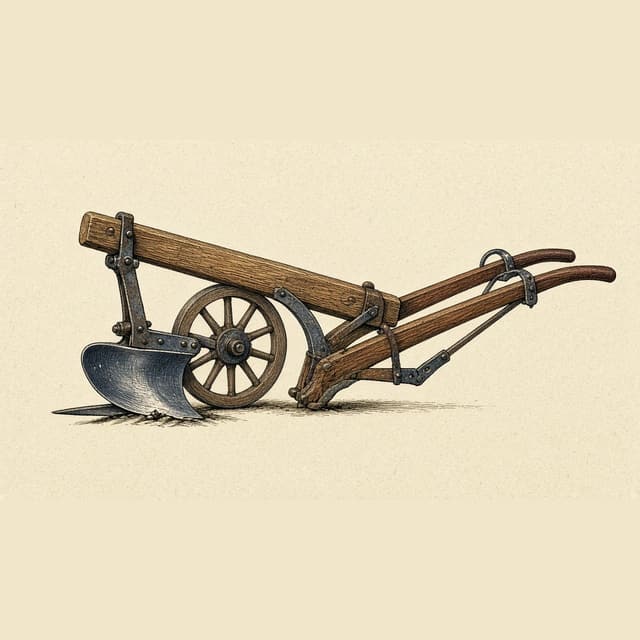
Illustration: A two-furrow plow.
Father had finally agreed to sell the oxen and buy a team of horses. Our cultivated land increased yearly and he had to buy a third horse and a two-furrow plow. I got this for $60.00 with two annual $30.00 payments.
In 1908 we had a very wet year and during harvest time we could not get into the field with the binder. We had to delay our harvest until the frost set in. The frost did considerable damage to our crop and although we had nine hundred bushels of wheat we had to sell it for the best price we could get which was seventeen cents a bushel. This after a cost of seven cents a bushel for threshing.
Illustration: Wooden crates of binder parts.
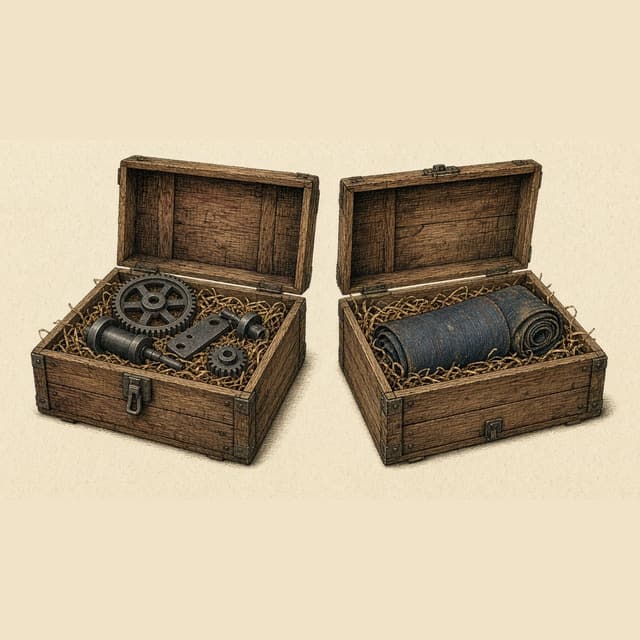
I continued to work part-time for the implement dealer in Gilbert Plains. Farmers had begun to buy their own binders and since there were only trails over which to travel, the parts of the binder were taken to the farms in their original boxes. These binders were scattered over the area from two to ten miles apart. I was paid $3.00 for setting up each binder, including my transportation and a bag of tools.
Farm wagons were also selling well. I recall the time when it took a farmer a whole day to pick out a wagon. He wanted to make sure that there wasn’t the slightest scratch on any part of it. It was dark when he finally made his selection. All we had to do then was put on the tongue. This part the farmer did not examine very closely. Next day he drove back fifteen miles to exchange the pole which he found to be crooked.
Illustrated online edition. The memoir text follows the 2011 copy compiled by Rene Nicholas Bilodeau.